 ultimate-guide
Early Pregnancy Scan: What to Expect
Table of Contents
- What Is an Early Pregnancy Scan?
- When to Have an Early Pregnancy Scan
- Early Pregnancy Scan Preparation: What You Need to Know
- What Happens During Your Scan
- What Can You See at 6 Weeks Pregnant Scan and Beyond
- Viability Scan Questions to Ask Your Sonographer
- What to Expect After Your Early Pregnancy Scan
- Managing Emotions and Anxiety Before Your Scan
- Frequently Asked Questions
Last Updated: September 28, 2026
What Is an Early Pregnancy Scan?
An early pregnancy scan is a diagnostic ultrasound examination performed in the first trimester to confirm pregnancy viability, establish gestational age, and detect potential complications. It uses sound waves to create detailed images of your uterus, embryo, and surrounding structures without radiation or invasive procedures.
Early scans serve a critical reassurance function. According to National Health Service guidance on pregnancy ultrasound, ultrasound scans are painless and have no known side effects on mothers or babies, making them the gold standard for early pregnancy assessment. Research from ScienceDirect's 2025 pregnancy imaging study shows that women prioritise first-trimester scans because the examination confirms the pregnancy and provides genuine peace of mind during a vulnerable time.
At Little Stars 4D Scan, we understand that seeing your baby for the first time is deeply personal. Our qualified female sonographers provide detailed explanations throughout your scan, ensuring you understand what you're seeing and feel fully supported. Whether you're seeking reassurance at 6 weeks or want a comprehensive viability assessment at 10 weeks, we're here to give you clarity without the NHS wait.
When to Have an Early Pregnancy Scan
Most women book their first private scan between 7 and 10 weeks of gestation for viability checks, though earlier scans are possible under specific conditions.
A fetal heartbeat can be reliably confirmed from approximately 6 weeks of gestation, which is why many women choose this timing for their first reassurance scan. Between 8 and 14 weeks, a dating scan establishes your due date with high accuracy for your antenatal care.
Common reasons to book an early scan include confirming viability, ruling out ectopic pregnancy, checking for multiple pregnancies, or gaining peace of mind. If you've experienced previous miscarriage, vaginal bleeding, or pelvic pain, an early scan provides critical reassurance.
Little Stars 4D Scan offers same-week appointments at our Nottingham, Sheffield, and Stoke-on-Trent clinics, so you don't have to wait weeks to get answers. Many women find that knowing they can access a scan quickly reduces anxiety significantly.
Early Pregnancy Scan Preparation: What You Need to Know
For a transabdominal scan, drink water about an hour before your appointment to fill your bladder, which acts as an acoustic window for clearer images. Wear loose, comfortable clothing that allows easy access to your abdomen.
For a transvaginal scan, you'll undress from the waist down. The sonographer uses a slim, covered probe inserted gently into your vagina, allowing closer proximity to your uterus and clearer early-pregnancy images.
Prepare yourself emotionally for what you might see and feel. Some women experience overwhelming joy; others feel unexpected anxiety or sadness, particularly if they've experienced loss. Both responses are entirely normal. Our female sonographers at Little Stars 4D Scan create a calm, unhurried environment where you can process what you're seeing.
What Happens During Your Scan
Your scan appointment typically lasts 15 to 30 minutes. The sonographer will ask about your medical history, previous pregnancies, and any symptoms you've experienced.

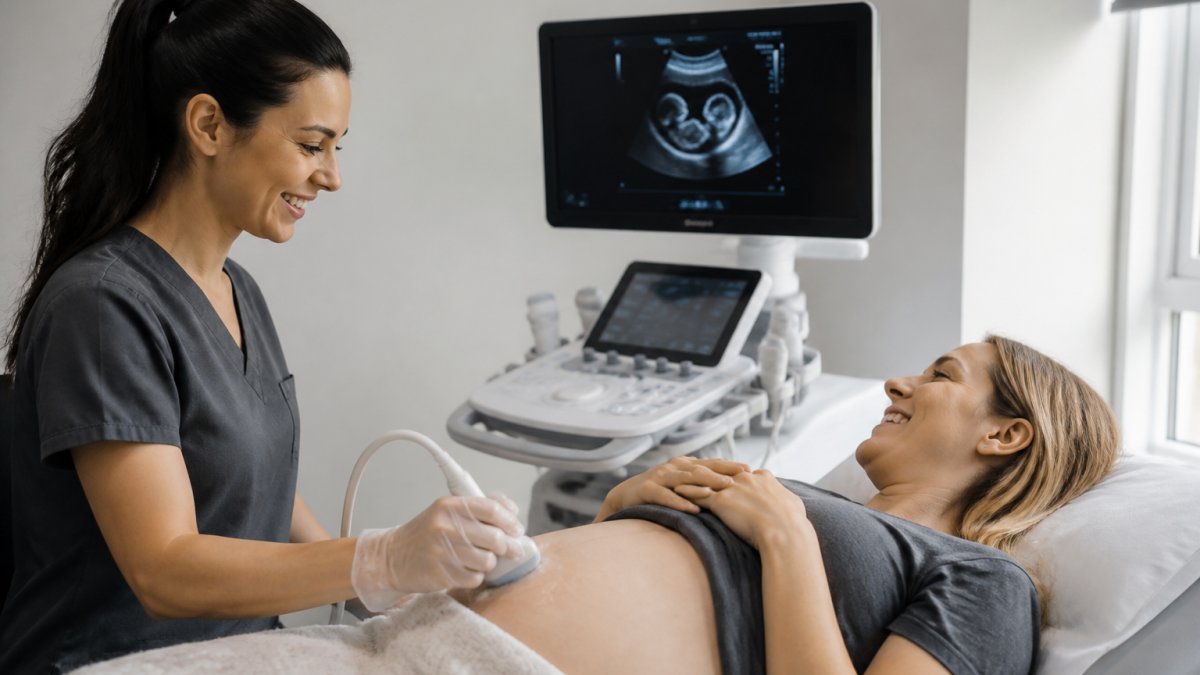
You'll be positioned on a comfortable couch, and the sonographer will apply clear gel or insert a covered probe. You'll see the ultrasound screen as the sonographer points out key structures: your uterus, gestational sac, yolk sac, and, if far enough along, the fetal pole and heartbeat.
Many women describe the experience as surreal, a positive test result suddenly becomes real on the screen. The sonographer will take measurements to confirm gestational age and check for any obvious anomalies.
Transabdominal vs. Transvaginal Ultrasound
Both methods produce high-quality images, but they have different advantages depending on your gestational age and what needs to be assessed.
Transabdominal ultrasound is performed over your abdomen with a handheld probe. It's non-invasive, comfortable, and suitable for pregnancies beyond 10 weeks, providing good visualisation of the entire uterus and surrounding structures.
Transvaginal ultrasound uses a slim probe inserted into the vagina, producing superior image clarity in early pregnancy. It's the preferred method for pregnancies under 10 weeks and is particularly valuable for confirming viability, detecting heartbeat, and ruling out ectopic pregnancy. Most women find it comfortable and quick.
Many women worry that transvaginal scanning is painful or invasive. The probe is narrow, the procedure is brief, and our female sonographers at Little Stars 4D Scan prioritise your comfort throughout.
What Can You See at 6 Weeks Pregnant Scan and Beyond
At 6 weeks of gestation, you'll see a gestational sac and a fetal heartbeat, the gold-standard confirmation of viability. Seeing that flicker of movement is the moment many women truly believe they're pregnant.
By 8 weeks, the embryo is clearly visible with a head and body.
Confirming Viability and Detecting the Heartbeat
Viability confirmation is the primary purpose of an early pregnancy scan. A viable pregnancy shows a gestational sac of appropriate size and a fetal heartbeat.
Identifying Multiple Pregnancies
Multiple pregnancies are typically identified during an early scan through assessment of the number of gestational sacs and fetal poles present.
Checking for Pregnancy Complications
Ectopic pregnancy occurs when the embryo implants outside the uterus, usually in the fallopian tube. An early scan can rule this out definitively by confirming an intrauterine pregnancy.
Viability Scan Questions to Ask Your Sonographer
Asking the right questions during your scan ensures you leave with complete understanding and confidence in your pregnancy status.
What to Expect After Your Early Pregnancy Scan
The period immediately after your scan is emotionally significant. You've crossed a major milestone: confirmation that your pregnancy is real and, in most cases, progressing normally.
Managing Emotions and Anxiety Before Your Scan
Anxiety before an early pregnancy scan is completely normal. You're about to receive information that will profoundly shape your pregnancy experience and emotional wellbeing. That weight is real.
Frequently Asked Questions
Is 8 weeks too early for an early pregnancy scan?
No. An early pregnancy scan between 7 and 10 weeks is ideal for confirming viability and detecting the fetal heartbeat. A gestational sac may be visible from 4.5 to 5 weeks of gestation, and a heartbeat can be reliably confirmed from approximately 6 weeks. At Little Stars 4D Scan, we perform viability scans at these early stages in our Nottingham, Sheffield, and Stoke-on-Trent clinics to give you peace of mind and diagnostic clarity without the NHS waiting times.
What should I do to prepare for my first pregnancy scan?
Preparation depends on the ultrasound type. For transabdominal scans, arrive with a full bladder, as this provides clearer images of the uterus and embryo. Drink water about an hour before your appointment. For transvaginal scans, an empty bladder is preferred. Wear comfortable, loose-fitting clothing that allows easy access to your abdomen. Arrive a few minutes early to complete any paperwork. Little Stars 4D Scan provides clear guidance when you book your appointment at any of our three clinics.
What is the difference between a viability scan and a dating scan?
A viability scan (typically 7-10 weeks) confirms the pregnancy is developing normally, detects the fetal heartbeat, and checks for complications such as ectopic pregnancy. A dating scan (8-14 weeks) estimates gestational age and calculates your due date based on fetal measurements. Both are important early assessments. Our qualified female sonographers at Little Stars 4D Scan explain the purpose and findings of each scan in detail.
How long does an early pregnancy scan take?
Most early pregnancy scans take 15-20 minutes. The sonographer will take time to check the uterus, confirm the number of embryos, measure the fetal pole, look for the yolk sac and heartbeat, and assess for any signs of pregnancy complications. At Little Stars 4D Scan, we prioritise unhurried, thorough examinations so you understand what you're seeing and feel fully reassured. We're available at clinics in Nottingham, Sheffield, and Stoke-on-Trent with same-week appointments.
What happens if something concerning is found on my early pregnancy scan?
If any concerns are identified, your sonographer will explain the findings clearly and provide a detailed written report for your GP, consultant, or midwife. You'll receive guidance on next steps, which may include additional scans, blood tests, or specialist referral. Little Stars 4D Scan is CQC-registered and staffed by professionally qualified female sonographers, ensuring you receive accurate diagnostic information and compassionate support. We're here to help you understand your results and access the care you need.
Can an early pregnancy scan detect all pregnancy complications?
An early scan can identify many major fetal anomalies and complications such as ectopic pregnancy, multiple pregnancy, or signs of miscarriage risk. However, not all conditions are detectable at this stage. Some conditions only become apparent later in pregnancy. Your sonographer will explain what can and cannot be seen at your scan stage. This is why antenatal care continues throughout pregnancy with further screening and monitoring. Little Stars 4D Scan provides diagnostic clarity at each stage and works with your healthcare team to support your pregnancy journey.
Is ultrasound safe for my baby?
Yes. Ultrasound scans are non-invasive and have no known side effects on mothers or babies, according to the NHS. Diagnostic ultrasound uses sound waves to create images and does not use radiation. Millions of pregnant women safely have ultrasound scans every year as part of routine antenatal care. Little Stars 4D Scan uses medically approved diagnostic equipment and our qualified sonographers follow strict safety protocols to ensure the highest standard of care at our Nottingham, Sheffield, and Stoke-on-Trent clinics.